








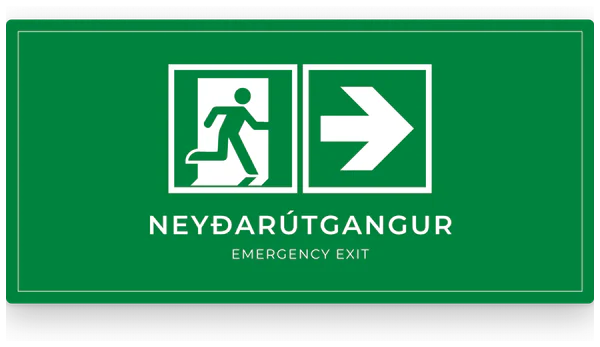
A workplace needs signs where hazards cannot be avoided in any other way, and which signs those are depends on a risk assessment. Where the rules require it, fire-fighting equipment, emergency exits and first aid, obstacles and fall hazards, and hazardous substances must be marked. Blue means mandatory action, red prohibition or fire, yellow warning and green emergency.
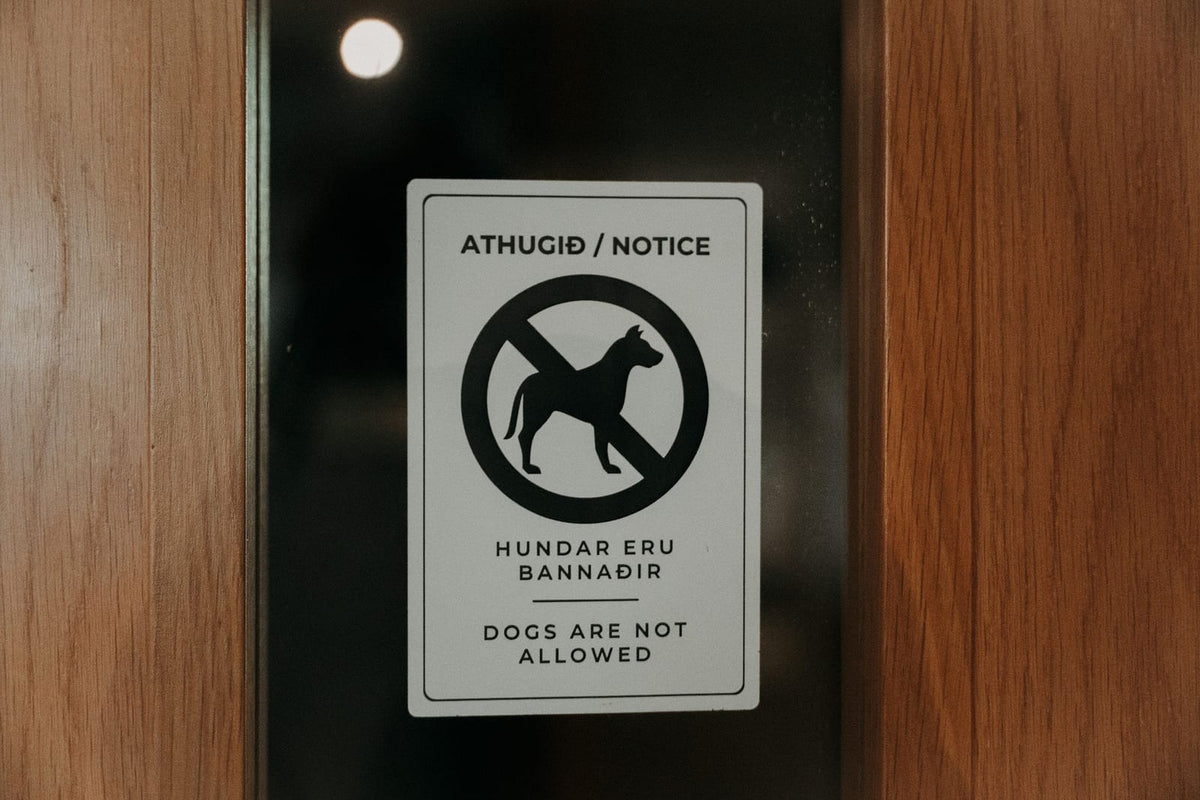
There is no fixed list in the rules of signs every workplace must have, but a few things need to be marked where the rules require it. Rules no. 707/1995 on safety and health signs work differently: you look at the hazards at your own workplace and mark where they cannot be removed in another way.
That means a carpentry workshop, a warehouse and a dry cleaner each need something different. Here we go through what the rules say and how you can walk around the workplace and build your own list.
What do the rules say about safety signs?
The core is article 3. The employer must put up safety and health signs where a hazard cannot be avoided, or reduced, by general precautions or by organising the work. The sign is, in other words, the last line of defence, not the first.
Staff must also receive training on what the signs mean (article 6), so the signs do not replace an introduction.
What must be marked in a workplace?
Although the rules are risk-based, a few things come up in most workplaces.
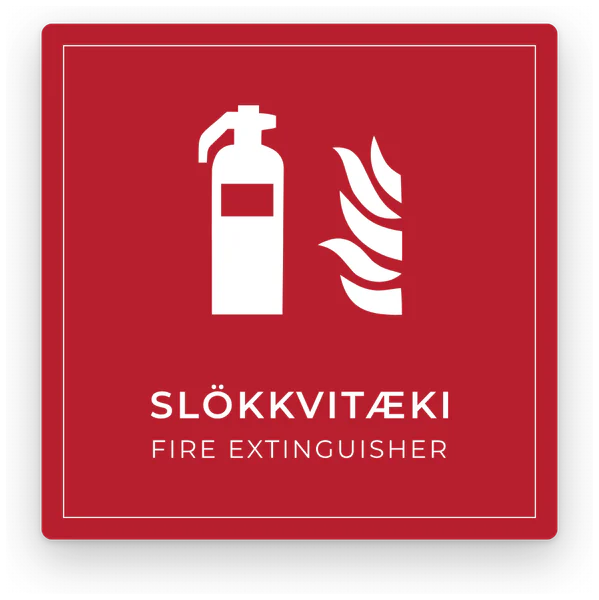
Fire-fighting equipment. It must be marked with a permanent sign and/or a permanent red safety colour (Annex I 2.1.1 and Annex IV). Examples are fire extinguisher, fire hose and fire alarm call point.
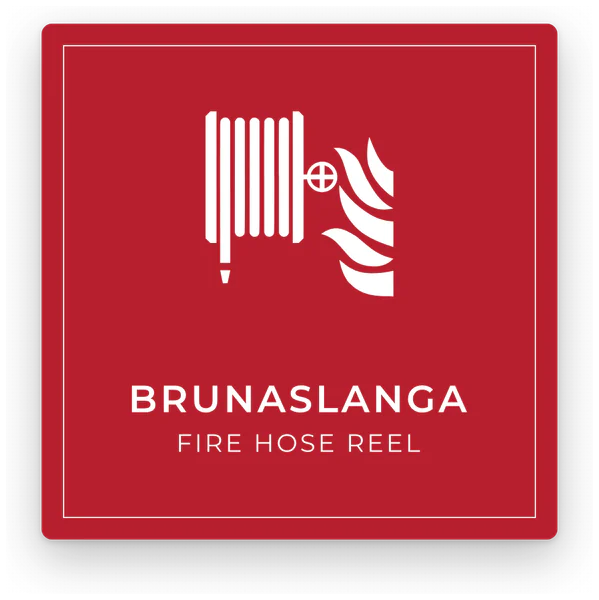
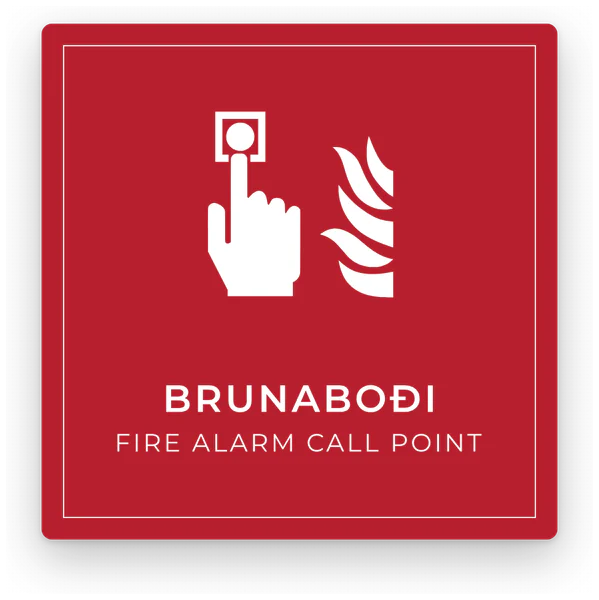
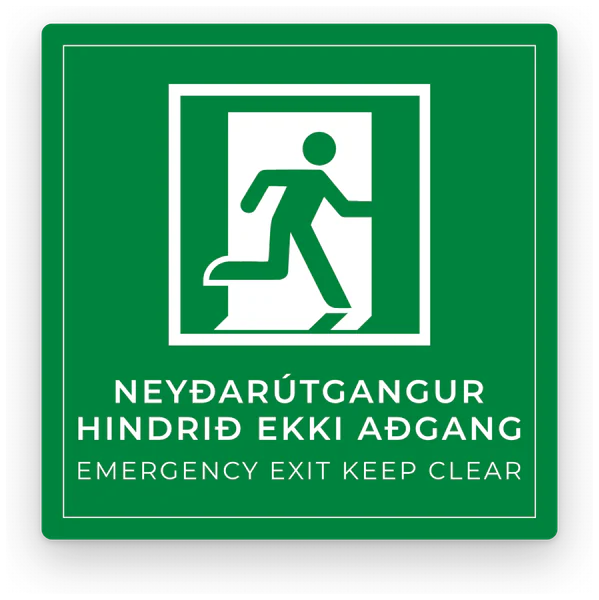
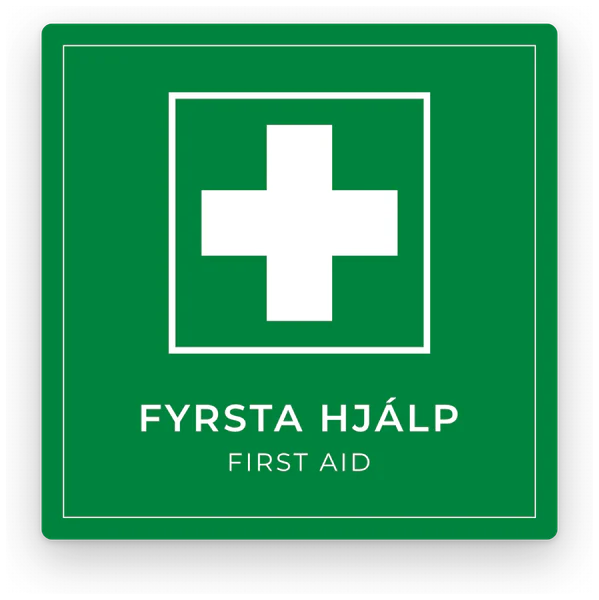
Emergency exits and first aid. They are marked with permanent signs. First aid, eye wash and assembly point are in the emergency and rescue signs.
Commercial premises also fall under the building regulation (112/2012, article 9.5.11). There, escape route markings must be illuminated or photoluminescent. Our emergency exit sign is engraved acrylic that does not glow by itself. It works well on doors and as a supplement, but we cannot say that it replaces illuminated escape route markings. Ask the fire inspectorate.
Obstacles and fall hazards. They must be marked permanently with a safety colour or signs (Annex I 2.1.3). Traffic routes must also be marked permanently with a safety colour (2.1.4), for example with lines on the floor.
Hazardous substances. Areas where a significant quantity of hazardous substances is stored must be marked with a warning sign (Annex III). The containers themselves need their own labelling with a pictogram, and that is a different matter from the sign on the door.
What do the colours on safety signs mean?
Safety signs speak a language most people understand without reading the text:
| Colour | Meaning |
|---|---|
| Blue | Mandatory action, something you must do, like using ear protection |
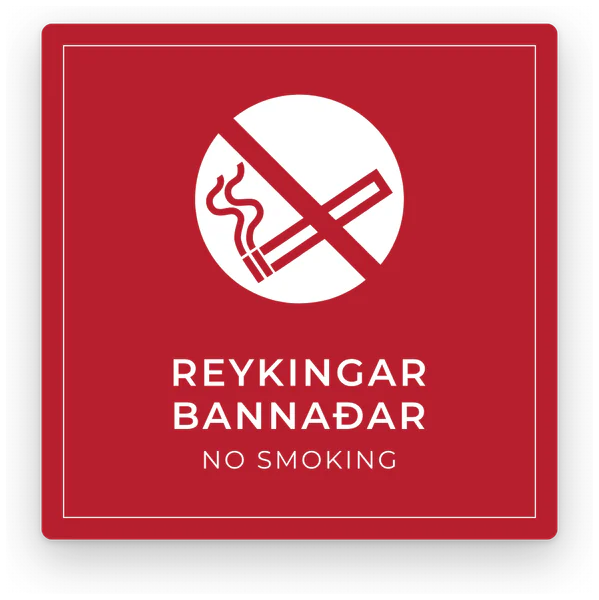
| Red | Prohibition or fire-fighting equipment |
| Yellow | Warning about a hazard |
| Green | Emergency and rescue |
Our signs are also available in white, black, gold and silver, and that can suit an office or a reception well. In a workshop and warehouse we recommend the standard colour. It is what people recognise and read at a glance.
How do you turn a risk assessment into a list of signs?
The best way is to walk around the workplace with the risk assessment in hand and ask at each place: what can happen here that we cannot prevent?
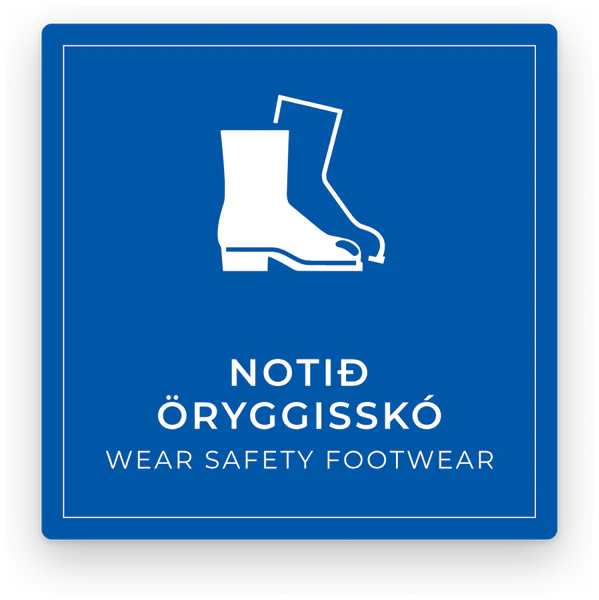
At the entrance to the work area it is usually the personal protective equipment. Hard hat required, safety shoes and high-visibility vest tell people what they need before they go in.

At machines it is noise, eyes and hands. Ear protection, safety glasses and Caution, crush hazard are common examples. For maintenance there are Disconnect before maintenance and Do not change the switch position.
In the warehouse it is about traffic and things that can fall. Caution, forklifts in traffic, suspended loads and fall hazard.
In the chemical store it is flammable substances, corrosive substances, toxic substances and gas cylinders. At electrical panels high voltage, and where batteries are charged Caution, batteries charging.
If the hazard at your site does not match any standard sign you can put your own text on a warning sign, a mandatory sign or a prohibition sign.
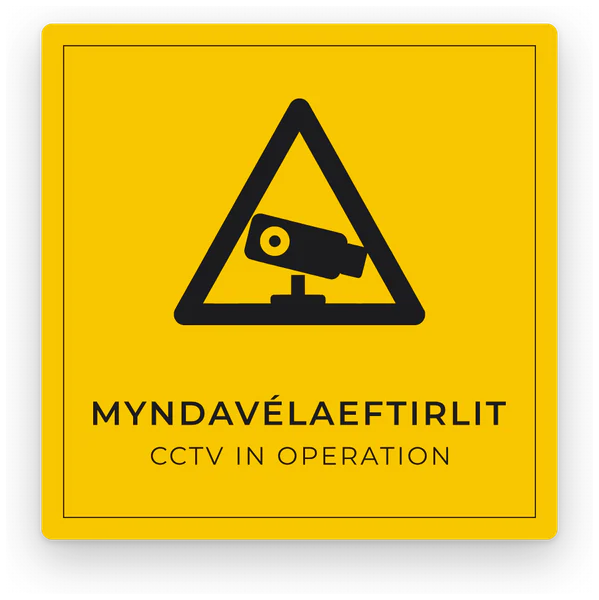
If you have cameras in the workplace, special rules on labelling also apply, see the post about camera signs.
What are our safety signs made of?
Our safety signs are engraved in two-tone acrylic, 1.6 mm, with international symbols and text in Icelandic and English. The acrylic is UV-protected and withstands Icelandic weather, so they also work outdoors. They come with adhesive on the back. If you want to screw them up we drill holes in the corners and screws are included, at no extra cost.
All the safety signs are on the information and safety signs page, and a selection for workshops and warehouses is at Industry and workplaces.
Frequently asked questions
Is there a list of signs a workplace must have? No. Rules 707/1995 are risk-based, so the signs depend on the hazards on site. Fire-fighting equipment, emergency exits and first aid do need to be marked where the rules require it, though.
Can a safety sign be in a colour other than red, blue, yellow or green? We offer other colours, but in work areas we recommend the standard colour. Under the rules, fire-fighting equipment must be marked with a permanent sign and/or a red safety colour.
Are the signs enough if the staff do not know what they mean? No. Under article 6 staff must receive training on the signs; the signs are a reminder, not a lesson.
Can I get a sign with our own text? Yes, in all categories: mandatory, prohibition, warning, emergency and fire.
Labelling a workplace?
If you have a long list or do not know quite where to start, feel free to drop us a line at sm@skiltiogmerkingar.is or through contact us. For larger orders we send you a quote. Production takes 3-5 working days and delivery is free.
This is a summary, not legal advice. The Administration of Occupational Safety and Health, the fire brigade and HMS can give more detailed answers about your workplace. Special rules for individual sectors, for example construction work, machinery and chemicals, are not covered here.
Sources
- Rules 707/1995 on safety and health signs in workplaces: https://assets.ctfassets.net/8k0h54kbe6bj/2WykU2BrueFwqOzafIlhjc/db49f1b8065779b271461feb5c71dda4/707_1995.pdf
- Rules and regulations of the Administration of Occupational Safety and Health: https://island.is/s/vinnueftirlitid/reglur-og-reglugerdir
- Building regulation 112/2012: https://island.is/reglugerdir/nr/0112-2012