




A place to stay needs an evacuation plan in every room, marked escape routes, smoke-free rooms, fire-fighting equipment and first aid, labelled cameras and a registration number outside the building. The rules cover safety, but the signs that help guests find their way are a matter of taste.

A surprising number of signs go up in a single guesthouse. A number on every door, the toilets, the breakfast room, the emergency exit and the fire extinguisher. Some of this is simply a matter of taste. Other things are set out in regulations, and it is good to know which is which before you order.
Here we go through what the rules say about accommodation providers and then what your guests actually need to find their way.
What do the rules require of accommodation providers?
A short overview, with details below:
- an evacuation plan in every room
- marked escape routes
- smoke-free rooms clearly marked
- fire-fighting equipment and first aid marked with permanent signs
- cameras labelled
- a registration number outside the building
An evacuation plan in every room
The building regulation (112/2012, article 9.5.2) says that in every guest room there must be a plan hanging that shows the escape routes and how guests should react to a fire. It is fixed to the wall by the entrance door or on the door itself. A similar provision applies to home accommodation in regulation 1277/2016.
This plan is made from the floor plan of the building, so it does not exist ready-made on a shelf. It is not in our product range today. HMS has published guidance on the article and that is a good place to start.
Marked escape routes
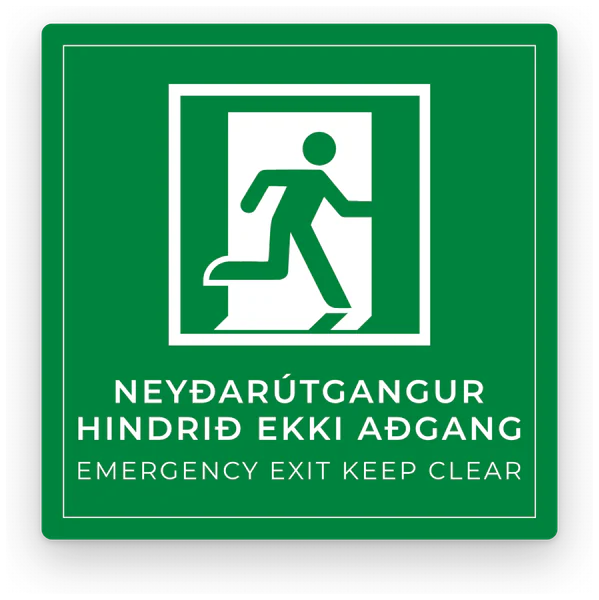
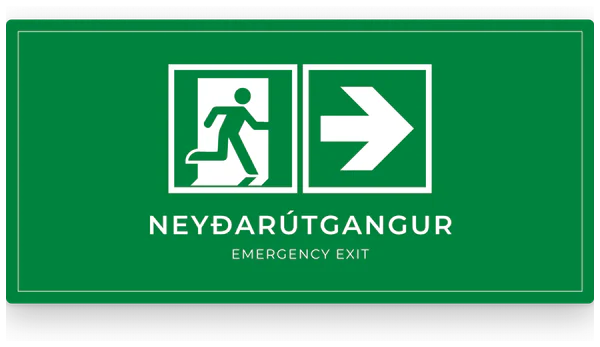
Hotels are in use category 4 and there escape routes must be marked with green, rectangular signs with a white symbol, at least 100 mm (article 9.5.11). The signs must be continuously illuminated from behind or from the front. The regulation also allows photoluminescent signs if the building has emergency lighting that charges them.
We want to be honest here. Our emergency exit sign is engraved in two-tone acrylic and does not glow by itself. It is good for marking doors and corridors as a supplement, but we cannot tell you that it replaces illuminated escape route markings where they are required. Ask the fire inspectorate what applies in your case.
Emergency exit sign with arrow
Engraved in two-tone acrylic, Icelandic and English. A supplement to illuminated escape route markings, not a substitute.
Smoke-free or not
Regulation 326/2007 (article 6) bans smoking in reception areas, corridors and elsewhere. If smoking is allowed in some rooms they must be marked separately. All other rooms must be marked so that it is clear that smoking is not allowed there.
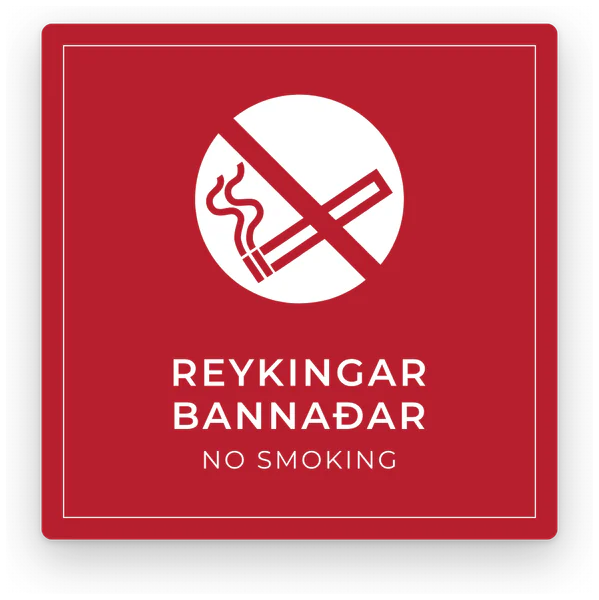
This is one of the few examples in Icelandic rules of a direct labelling duty, and it extends to every single room. A small No smoking sign on the door solves it. If you prefer the words "Smoke-free room" you can use a prohibition sign with your own text.
No smoking sign
A small sign for the door, one for each room.
Fire-fighting equipment and first aid
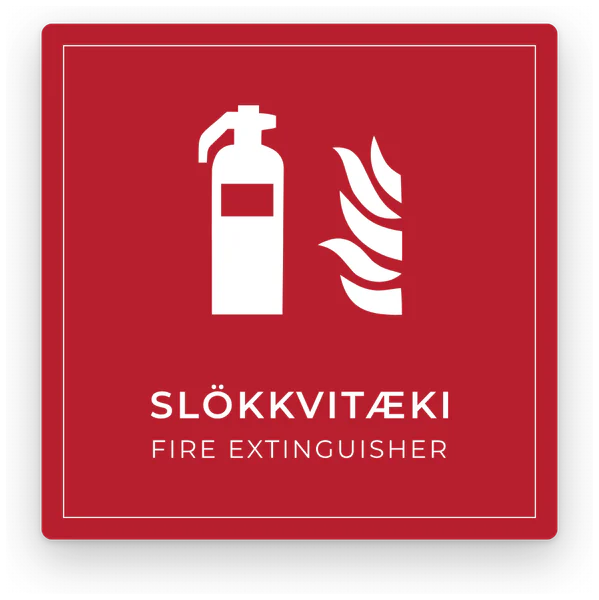
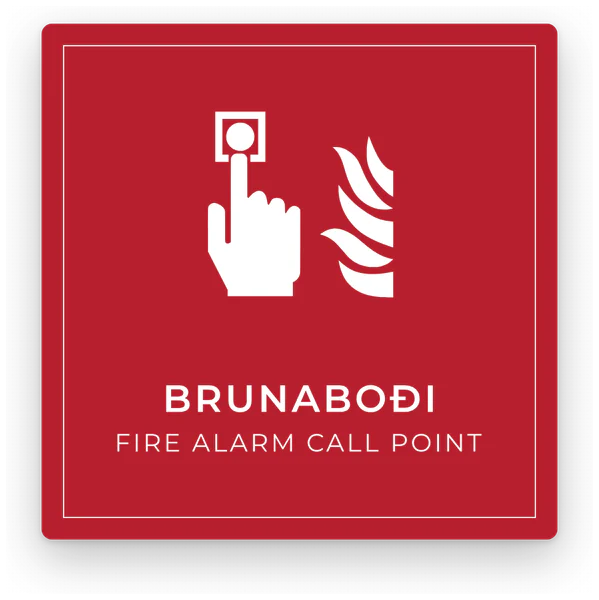
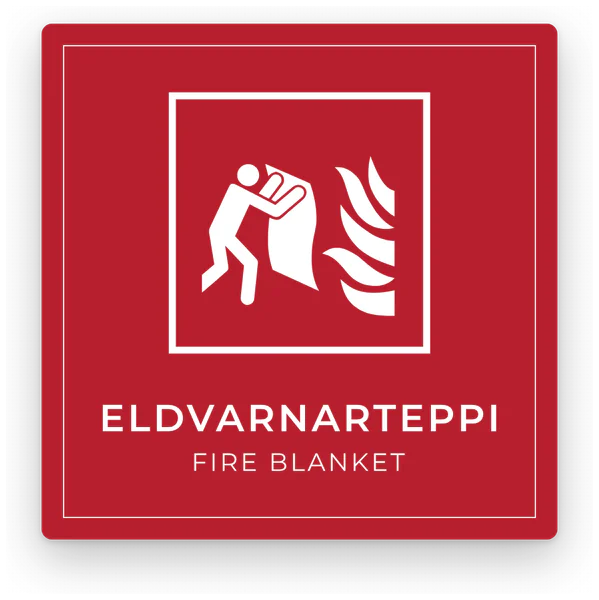
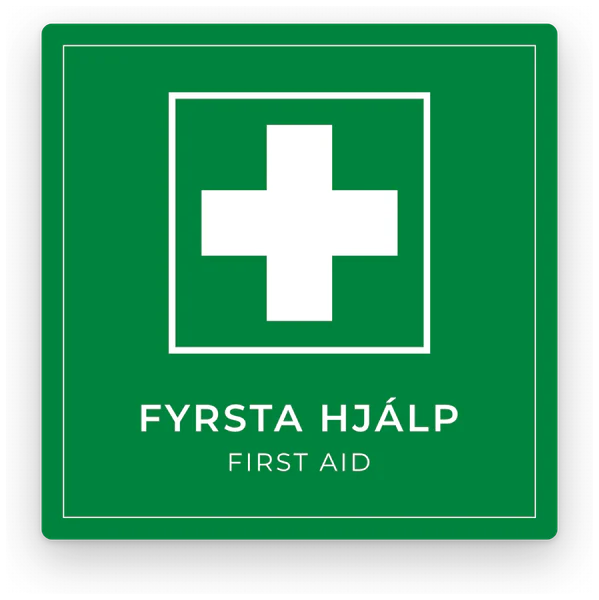
Portable fire extinguishers must be in all buildings (article 9.4.4). Your staff are also at a workplace, and rules 707/1995 on safety signs say that where fire-fighting equipment, emergency exits and first aid need to be marked, permanent signs are to be used, and for fire-fighting equipment permanent signs and/or a permanent red safety colour. We have fire extinguisher, fire alarm call point, fire blanket and first aid signs, and the rest in the fire signs.
Cameras
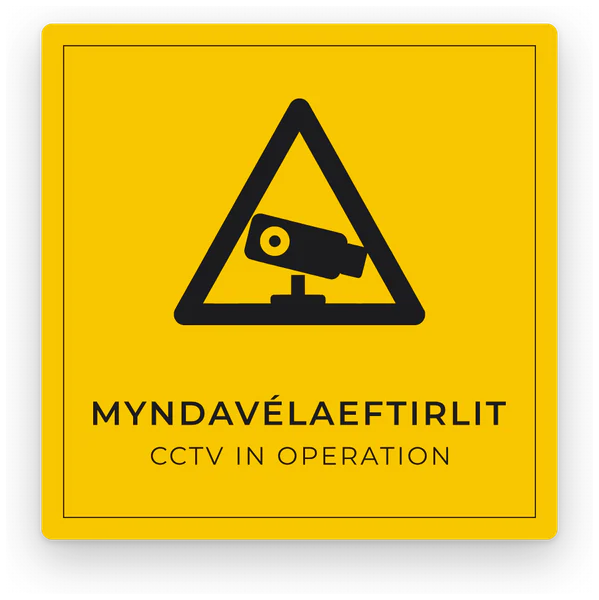
If there are cameras on the premises this must be indicated before people enter the monitored area (Data Protection Authority rules 50/2023, articles 8 and 9). A picture of a camera is not enough on its own. The notice must also say who is responsible for the monitoring and where more information can be found.
The Camera surveillance sign draws attention to the monitoring. Make sure the information about the controller is also shown, for example on a plate beside it.
Registration number outside the building
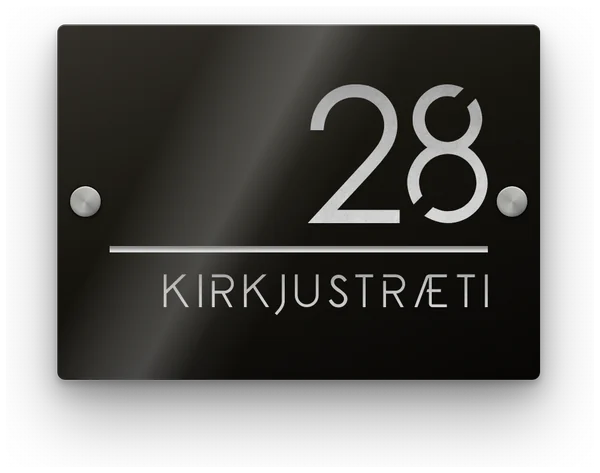
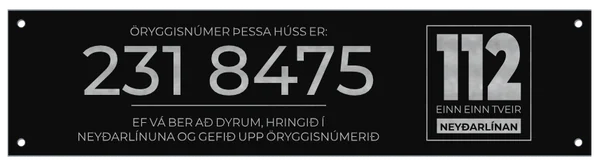
According to regulation 1277/2016 (article 41) the registration number or licence number must be shown on a sign or marking outside the accommodation or near it. The District Commissioner can tell you exactly what should be on it.
What do guests need to find their way?
The rules only cover safety. The rest is about a guest who arrives late in the evening finding their room without calling reception.
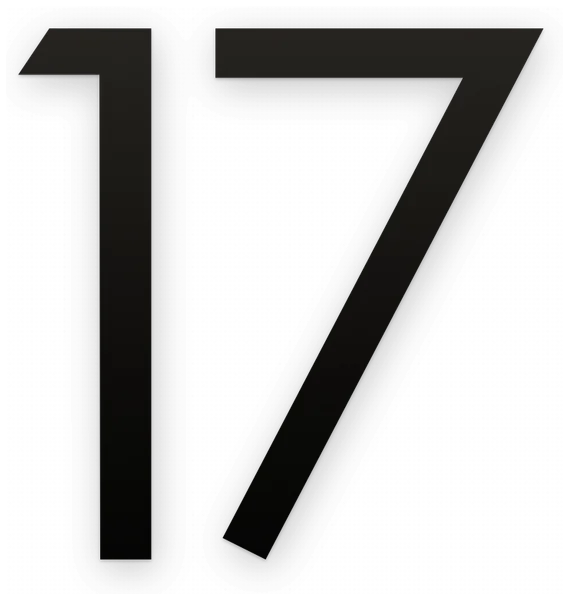
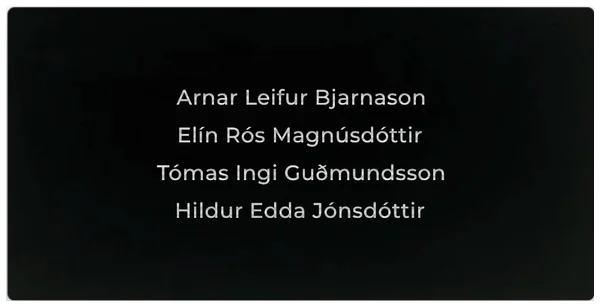
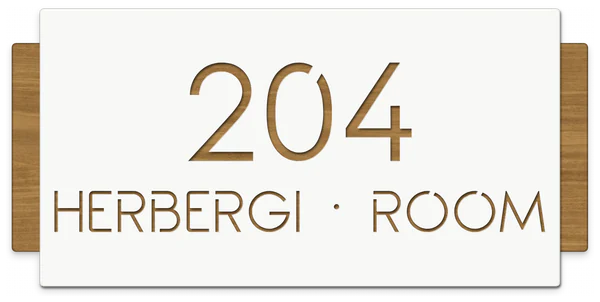
Start with the room numbers, they are seen the most. Room numbers are made for exactly this, one for each door.
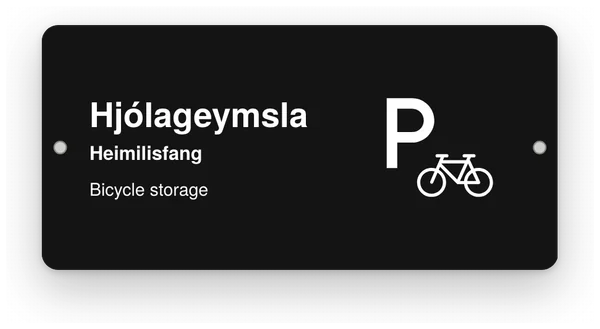
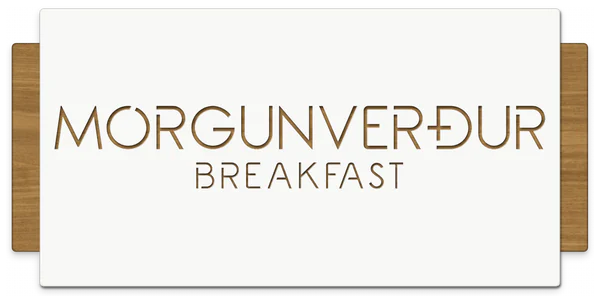
Then come the spaces themselves. The hotel signs have words like Reception, Breakfast, Dining room, Laundry and Staff, and you can also add your own text.
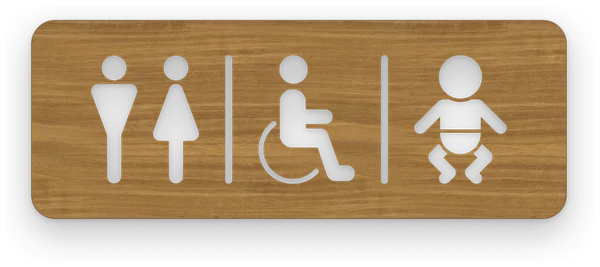
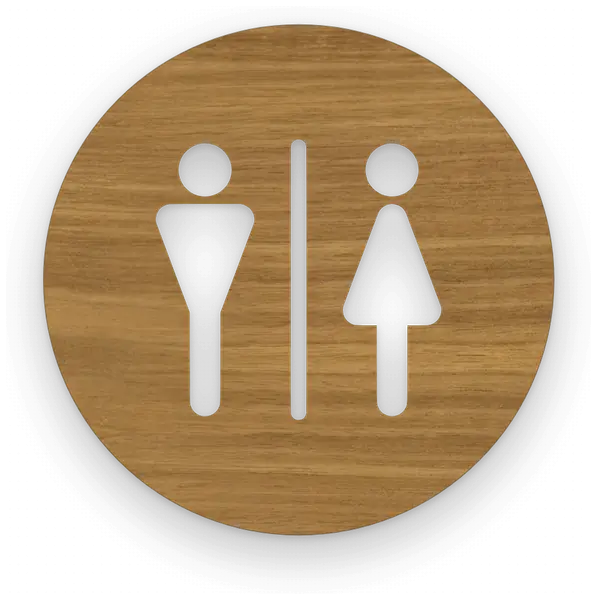
The toilets need to be found straight away. The rectangular WC sign lets you choose the symbols yourself, and the round signs are available for toilet, accessibility and changing facilities. You can read more about the symbols in the post about WC signs. There are also shower and cleaning in the same style.


Our safety signs carry international symbols and text in Icelandic and English. That helps when the guest does not read Icelandic.
One more tip: pick one look and stick to it. If the room numbers, the toilet signs and reception are in the same material and colour the whole building looks calmer.
All the signs for accommodation providers are together on the page Hotels and guesthouses.
Frequently asked questions
Does every hotel room need to be marked smoke-free? Yes. According to regulation 326/2007, every room where smoking is not allowed must be marked so that this is clear.
Is an engraved emergency exit sign enough in a hotel? Not on its own where escape route markings are required. They must be illuminated or photoluminescent, so an engraved sign is a supplement, not a substitute. The fire inspectorate can answer for your building.
What language should the signs be in? We found no provisions on language for accommodation labelling. Our safety signs are in Icelandic and English with international symbols.
How long does it take to get the signs? Production takes 3-5 working days and Iceland Post 1-3 working days, and delivery is free. If more than 10 pieces are ordered, production can take slightly longer.
Labelling a place to stay?
If you are opening a new place or replacing the old signs, feel free to drop us a line at sm@skiltiogmerkingar.is or through contact us. Tell us the number of rooms and what you need, and for larger orders we send you a quote. We are a father and son in Reykjanesbær and make the signs ourselves at our workshop.
This is a summary, not legal advice. The fire brigade, HMS and the District Commissioner can give more detailed answers about your premises and operating licence.
Sources
- Building regulation 112/2012: https://island.is/reglugerdir/nr/0112-2012
- HMS guidance on article 9.5.2: https://www.byggingarreglugerd.is/leidbeiningar/flottaleidir
- Regulation 1277/2016 on restaurants, accommodation and entertainment: https://island.is/reglugerdir/nr/1277-2016
- Regulation 326/2007 on restrictions on tobacco smoking: https://island.is/reglugerdir/nr/0326-2007
- Act 6/2002 on tobacco control: https://www.althingi.is/lagas/nuna/2002006.html
- Data Protection Authority rules 50/2023 on electronic monitoring: https://adverts.stjornartidindi.is/B_nr_50_2023.pdf
- Rules 707/1995 on safety and health signs in workplaces: https://assets.ctfassets.net/8k0h54kbe6bj/2WykU2BrueFwqOzafIlhjc/db49f1b8065779b271461feb5c71dda4/707_1995.pdf